Geely EX2 85kW Ultra 47kWh 5dr Auto
- Automatic
- Electric
- 5 door suv


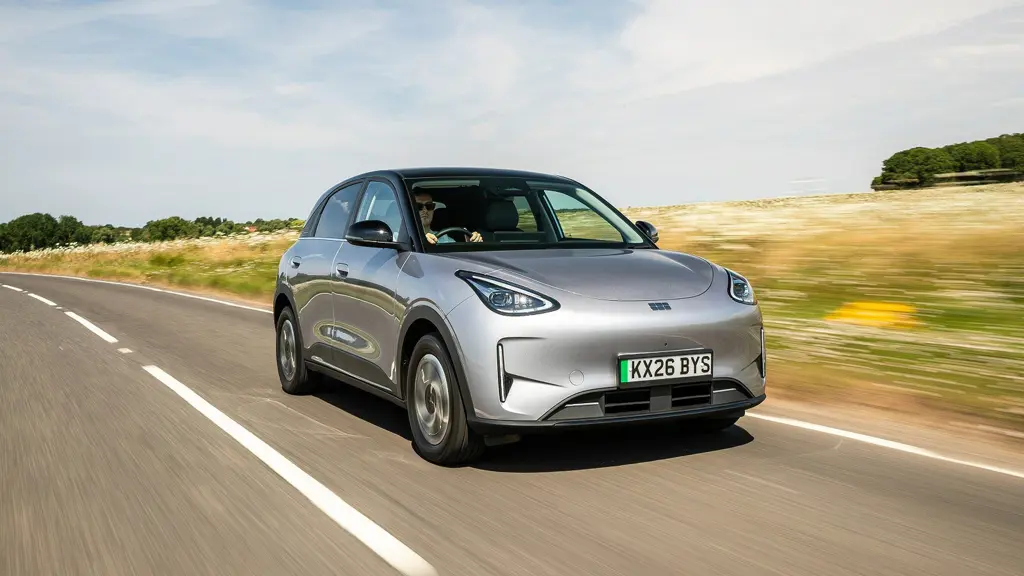
Images shown are for illustration purposes only
-
11.5 secs 0 to 62 mph
-
116 bhp Engine power
-
214 mi Combined range
-
47.1 kWh Battery capacity
-
8 yrs Battery warranty
8 years or 125,000 miles
Ten Second Review
Geely's EX2 offers yet another option for someone in search of a budget EV hatch, with value as its over-riding trump card - though perhaps not quite as much value as we'd hoped. Still, though one of the less charismatic class options, it's spacious, well-equipped and smartly-finished. So there's lots you might be tempted by here, but you'll need to know what you're getting.
Background
So what might the best-selling car in China be like? This Geely EX2 will tell us. This supermini-shaped EV sold an impressive 460,000 units in its home Oriental market in 2025 and the brand has high hopes for success with it in Europe - and Britain in particular. It has a rather less snappy model name in China - the Geome Xingyuan; and a simpler one in Europe - the E2. But either way, the recipe is the same - a value-based rear-driven small electric hatch aimed at the heart of the budget EV segment. Whose success will be pivotal if Geely is to reach its goal of selling 100,000 cars a year in the UK market by 2030 - by which time the EX2 will be one of ten models in the Geely line-up.
Driving Experience
A rear-driven format is still a little unusual for a small hatch of this size, despite the way that the VW Group and MG have championed it. Yet that's what this EX2 has - a side benefit of which is a London taxi-like 9.9-metre turning circle around town. There are two battery sizes, but almost all EX2 customers will ignore the base 35kWh 'Pro' version - rightly because it has a feeble 80bhp motor and takes you just 155 miles between charges. Focus instead on the 'Max' and 'Ultra' models, which use a 47kWh battery that energises a 114bhp motor and takes you up to 214 miles between charges. You might have been hoping for a little more in terms of drive range - and that would be understandable. After all, if you're prepared to sacrifice a bit of cabin space, the money needed for a bigger-battery EX2 would get you, say, a Renault 5 which with its larger battery pack can go up to 252 miles on a charge. Pay a bit more for something like a Kia EV2 or a VW ID.Polo and you'd be up towards the 280 mile mark. Still, perhaps suburban folk might not be bothered about that too much. And might appreciate the relatively composed way this Geely goes down the road. The ride is quite composed, refinement is good and generally, it feels ike you're driving a more substantial family hatch-class car from the next seghment up - which is many ways you are. You certainly wouldn't want the 80bhp 'Pro' version of this Geely if you weren't urban-based because it feels even slower than the 14.2s 0-62mph stat suggests. The bigger-battery 47kWh model is hardly a ball of fire either - it shares the same modest 150Nm torque figure, so overtakes will need a lot of forward planning. But at least it's better able to keep up with traffic flow, 0-62mph taking 11.5s.
Design and Build
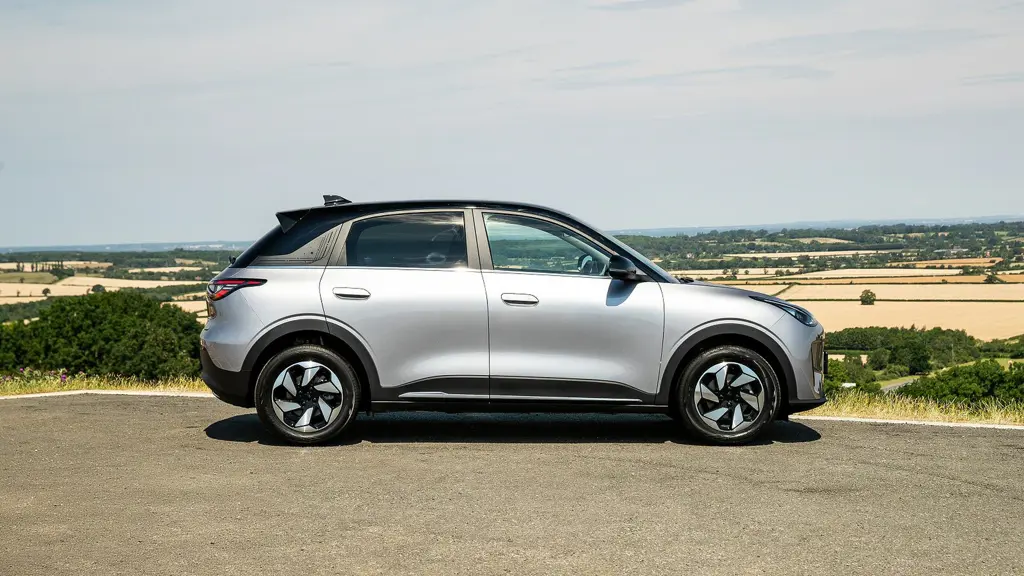
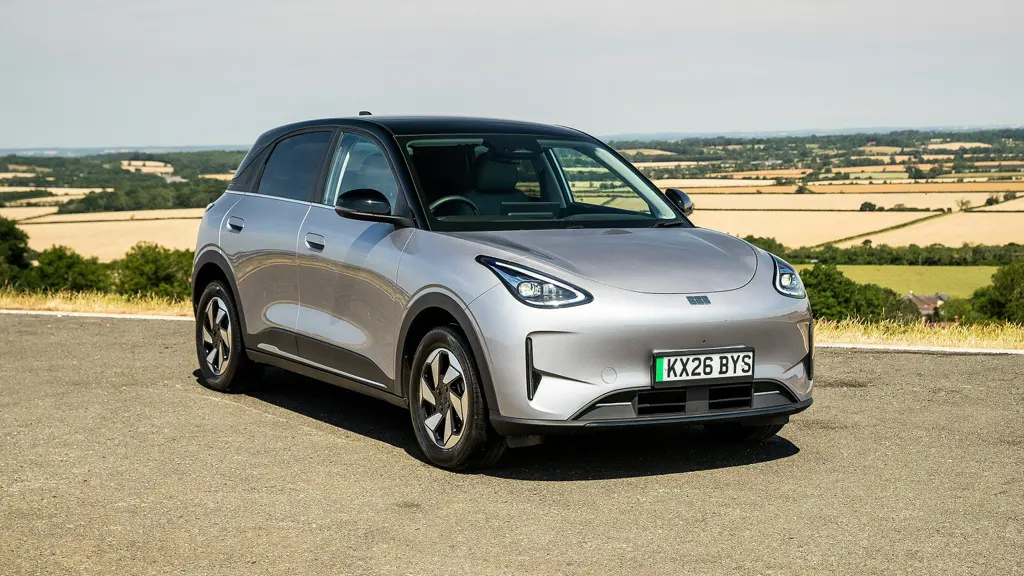
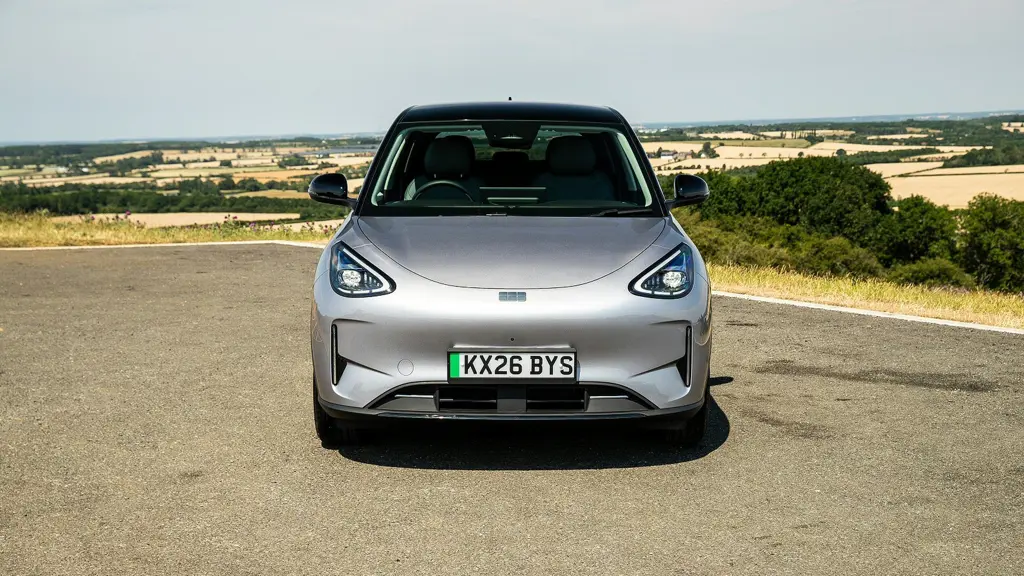
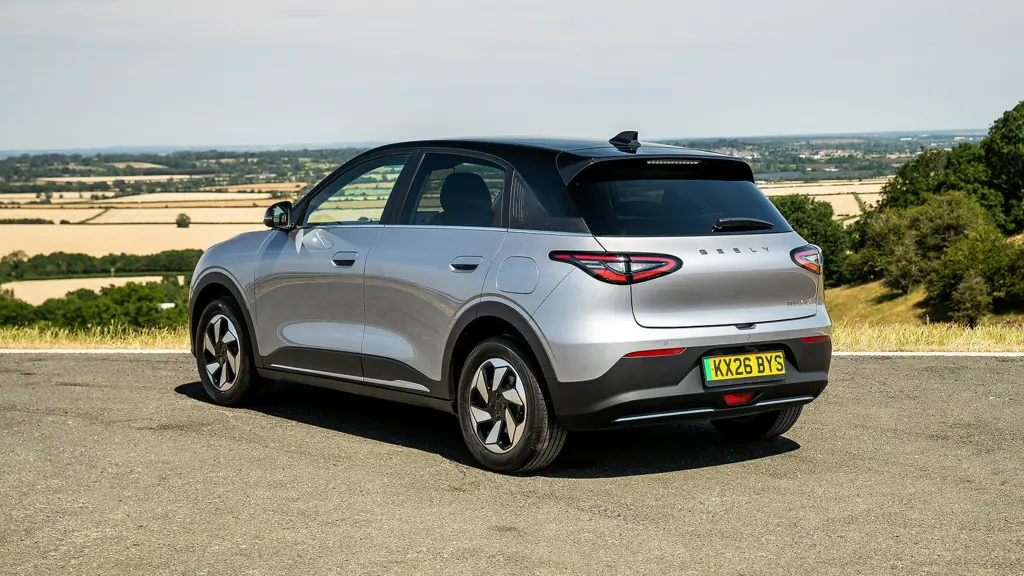
Imagine what a small electric Chinese hatchback might look like and it's quite possible that you'll find yourself picturing something quite similar to this EX2, with a rounded body shape and smartly-surfaced, anonymous curves. The idea was to create a B-segment (supermini) model with the cabin space of a C-segment family hatchback. And sure enough, the 4,135mm body length makes this Geely bigger than, say, a Renault 5 or a Citroen e-C3. But not quite as big as, say, a Volkswagen ID.3 Neo or a Renault Megane. Think MG4 EV in terms of size and you'll not be far out. Smart design details include flush door handles and light signatures inspired by bird's feathers. The wheel size is 16-inches and you can have some nice pastel colours. Inside, despite the budget origins, the cabin actually feels quite nicely put together, though emits a rather chemical odour. You can have a white interior as well as a dark one and there are more buttons than you'd usually expect to find on a Chinese car. But of course the usual over-reliance on a centre screen dominated by the wallpaper backgrounds that Geely seems to like so much. There's lots of cheap-feeling plastic and piano black trim, but you'd expect that at this price (though rivals like the Renault 5 and the Kia EV2 more pleasingly use fabrics to break things up). A nice touch though, is the illuminated constellation patterning on the dashboard and doors. The 8.8-inch driver's display is bright and sharp but over-busy with over-small fonts. It's a practical space, with 36 assorted cubbies and storage areas, including a rather unique 10-litre drawer-style glovebox that, astonishingly, is big enough to hold the charging cable. The driving position is fine but the seats lack lumbar and under-thigh support. Rear seat space is a major selling point - or at least it will be if your point of comparison is something supermini-sized. In comparison to cars like that, where the rear seats are essentially only for kids, you can fit real adults in the back of an EX2. There's plenty of leg and headroom and a kind of alcove beneath the bench for storage of up to 25-litres. The boot is nearly family hatch-sized at 375-litres (50-litres more than a Renault 5) and you don't have to store the charging leads there because Geely provides a 75-litre under-bonnet 'frunk' for that. Fold the rear bench and there's 1,320-litres of space.
Market and Model
Geely's keen to tell us just how successful the EX2 is in its home market. But much of that success has to do with an Oriental asking price which is 2025 was the equivalent of no more than around £7,000. With this in mind, we'd hoped that the Chinese maker would be able to sell this model in the UK as one of our country's very cheapest electric cars - but the EX2 is far from that. The starting price of around £21,000 is actually more than some established supermini EV segment rivals - and that figure actually applies to a 35kWh 'Pro' version with restricted drive range more akin to budget EVs that are £5,000 or more cheaper. Almost all British EX2 sales will be of the 47kWh models, either the 'Max' (at around £23,500) or the better-equipped 'Ultra' (around £25,500). Geely points out that in return for these figures, you're getting a near-family hatch-sized EV or the sort that might cost £5,000 or so more - and there's some truth in that. You're also getting an awful lot of standard kit for your cash. This includes 16-inch alloy wheels, auto LED headlights, rear privacy glass, LED tail lamps, adaptive cruise control, keyless entry, a reversing camera and an alarm. Inside, there's an 8.8-inch LCD instrument cluster, automatic air conditioning and a 14.6-inch FLYME AUTO central touchscreen with 4G connectivity and wireless 'Apple CarPlay' and 'Android Auto. There's also Vehicle-to-Load tech so that external devices can be powered from the car's drive battery. If you stretch to top-spec 'Ultra' trim with its two-tone paint scheme, then you'll also get a 360-degree surround view camera, heated front seats, 256-colour ambient lighting and a heated steering wheel. Plus a 6-speaker audio system, cooled wireless 'phone charging and a powered tailgate. As usual with Chinese cars, there's a huge suite of ADAS camera drive assist features, though as on other Geelys, these can be intrusive - and awkward to disable (though the brand says it's working on that). Remember that unless you choose your EX2 with the only standard solid white paint colour, you'll have to find £600 more for your chosen shade. And it's £200 more if you want a white (rather than a dark) cabin finish.
Cost of Ownership
Charging is another area where Geely really needs to do some work with this car. For a start, the DC charging speed isn't particularly impressive, rated at only 80kW for the larger 47kWh battery and just 60kW for the smaller 35kWh battery. At a suitable rapid public charger, a 30-80% DC charge is quoted at 25 minutes with all models. What about charging at home? Well the tech behind that's disappointing too because with both batteries, Geely has capped AC charging at just 6.6kW, so there's no benefit in using a three-phase 11kW supply and even with a normal 7.4kW single-phase AC wallbox, you won't quite get the full benefit of its output. As a result, the smaller-battery 'Pro' model needs five hours and 18 minutes to fully AC charge; it's 7 hours 10 minutes for the 'Max' and 'Ultra' 47kWh models. There's a 'Geely Care+' ownership programme offering warranty, servicing, roadside asistance and 24/7 support. Specifically, that means an eight year/125,000 warranty (for the full car, not just the battery - which, incidentally, Geely makes itself). Plus four years of 24/7 roadside assistance. This should take away some of the fear factor from investing in an unknown brand. The servicing intervals are every two years or 20,000 miles, whichever comes first. After three years and 36,000 miles, this EX 2 'Ultra' model would still be worth 41% of it's original purchase price - around £10,400. Insurance groups are 14-19.
Summary
The EX2 offers a decent value proposition, but given the cheapness of its price in its home market, we'd hoped for more. As it is, unless you get an exceptional deal one of these (which is very possible given the production cost margin the brand has to play with), it might not save you that much on a more established brand segment rival. Which might be an issue given that the competitor in question is likely to take you a little further on each charge than will an EX2: will charge faster; and probably won't have ADAS systems quite as intrusive. But you might still be drawn to this Geely for its nicely furnished cabin, its generous equipment levels and, particularly, for its spacious rear seat. And the drive dynamics suggest that at last, the brand's R&D relationship with Lotus is bearing some fruit. In order to reach ambitious sales targets that took established brands decades to achieve, Geely will need bigger product development steps forward than this. But the EX2 represents a small but significant move in the right direction.
- 540 degree panoramic camera with transparent chassis view
- Adaptive cruise control
- Alcohol lock security connection
- Auto lane change assist
- Blind spot detection
- Driver monitoring system
- Driving mode (Normal, Eco, Sport, Snow)
- Electric power steering
- Emergency lane keep assist
- Evasive manoeuvre support
- Forward collision warning
- Front Cross Traffic Alert
- Highway assist
- Intelligent speed assistance
- Lane change assist
- Lane departure warning
- Lane keep assist
- Life detection
- Low speed alert for EV driving
- Rear collision warning
- Rear cross traffic alert
- Rear parking radars
- Traffic sign recognition
- Trunk escape switch
- Vehicle camera power port
- 6 speaker audio system
- Front USB ports (1 x Type-A and 1 x Type-C)
- Rear USB ports (1 x Type-A)
- 70L front trunk
- Active grille shutters
- Metal side skirts
- Rear side wing doors
- Rear spoiler
- Semi concealed exterior door handles
- 4 Way manual steering wheel adjustment
- Front centre armrest with 2 cupholders
- Heated steering wheel
- Microfiber leather multifunction steering wheel
- Synthetic leather wrapped console
- Flyme auto in-vehicle infotainment system pack - EX2
- 3 point seatbelts on all seats
- Backup battery sounder
- Direct TPMS (with real time reading)
- Door open warning
- Driver and front passenger airbags
- Electronic child safety lock
- Far side airbag
- Front and rear seatbelt reminder
- Front seatbelts CLT (continuous loop tongue) buckle
- Front seatbelts with self adaptive pretensioners and energy absorber
- Front seatbelts with waist pretensioners
- Front side airbags x2
- Rear seatbelts with pretensioners and force limiters
- Reflective vest
- Side curtain airbags x2
- Standard retractor for 2nd row mid seat
- Warning triangle
- Anti theft double lock door
- Automatic drive away locking facility
- Burglar alarm
- Electronic anti-theft system
- IMS with inclination sensor
- Keyless entry and passive start
- Battery Capacity % guaranteed under warranty: 70
- Battery Capacity in kWh: 47.1
- Battery Charging Scenario 1 - Charge Time (Mins): 430
- Battery Charging Scenario 1 - Percentage Change: 10-100
- Battery Charging Scenario 1 - Power Supply - kW: 6.6
- Battery Charging Scenario 2 - Charge Time (Mins): 25
- Battery Charging Scenario 2 - Percentage Change: 30-80
- Battery Charging Scenario 2 - Power Supply - kW: 80
- Battery Charging Scenario 3 - Charge Time (Mins): N
- Battery Charging Scenario 3 - Percentage Change: N
- Battery Charging Scenario 3 - Power Supply - kW: N
- Battery Charging Scenario 4 - Charge Time (Mins): N
- Battery Charging Scenario 4 - Percentage Change: N
- Battery Charging Scenario 4 - Power Supply - kW: N
- Battery Leased: False
- Battery Type: Lithium-ion
- Charging Port Location: Right Side Rear
- Coupler/Connector Type: CCS Type 2
- Maximum Charging Rate - kW: 80
- Standard manufacturers Battery warranty - Mileage: 125000
- Standard manufacturers Battery warranty - Years: 8
- Usable Battery Capacity: 45.7
- WLTP - EC (kWh/100km) - Comb: 15.5
- WLTP - EC (miles/kWh) - Comb: 4
- WLTP - Pure Electric Range (km) - City: 497
- WLTP - Pure Electric Range (km) - Comb: 345
- WLTP - Pure Electric Range (miles) - City: 308
- WLTP - Pure Electric Range (miles) - Comb: 214
- CO: N
- CO2 (g/km): 0
- HC: N
- HC+NOx: N
- Noise Level dB(A): N
- NOx: N
- Particles: N
- Standard Emissions: N
- Camshaft: N
- Catalytic Convertor: N
- CC: 1
- Compression Ratio: N
- Cylinder Layout: N
- Cylinders: N
- Cylinders - Bore (mm): N
- Cylinders - Stroke (mm): N
- Engine Code: N
- Engine Layout: N
- Fuel Delivery: N
- Gears: 1 SPEED
- Number of Valves: N
- Transmission: AUTO
- EC Combined (mpg): N
- EC Directive 1999/100/EC Applies: N
- EC Extra Urban (mpg): N
- EC Urban (mpg): N
- Alternative Fuel Qualifying: True
- Badge Engine CC: 0.0
- Badge Power: 116
- Based On ID: N
- Coin Description: N
- Coin Series: Ultra
- Generation Mark: 1
- Insurance Group 1 - 50 Effective January 07: 19E
- Man Corrosion Perforation Guarantee - Years: 12
- Manufacturers Paintwork Guarantee - Years: 3
- Safety Concerns: False
- Service Interval Frequency - Months: 24
- Service Interval Mileage: 20000
- Special Edition: False
- Special Order: False
- Standard manufacturers warranty - Mileage: 125000
- Standard manufacturers warranty - Years: 8
- Timing Belt Interval Frequency - Months: N
- Timing Belt Interval Mileage: N
- Vehicle Homologation Class: M1
- 0 to 62 mph (secs): 11.5
- Engine Power - BHP: 116
- Engine Power - KW: 85
- Engine Power - PS: True
- Engine Torque - LBS.FT: 111
- Engine Torque - MKG: 15.3
- Engine Torque - NM: 150
- Top Speed: 130
- Emissions Test Cycle: WLTP
- RDE Certification Level: N/A
- Alloys: True
- Space Saver: False
- Tyre Size Front: 205/60 R16
- Tyre Size Rear: 205/60 R16
- Tyre Size Spare: TYRE REPAIR KIT
- Wheel Style: N
- Wheel Type: 16" ALLOY
- Height (including roof rails): 1580
- Length: 4135
- Wheelbase: 2645
- Width: 1805
- Fuel Tank Capacity (Litres): N
- Gross Vehicle Weight: 1755
- Luggage Capacity (Seats Down): 1320
- Luggage Capacity (Seats Up): 375
- Max. Loading Weight: 390
- Minimum Kerbweight: 1365
- No. of Seats: 5
- Turning Circle - Kerb to Kerb: 10