Volvo XC90 2.0 T8 406 PHEV Plus Dark 5dr AWD Geartronic
- Automatic
- Petrol Parallel PHEV
- 5 door suv
- 27 g/km CO2


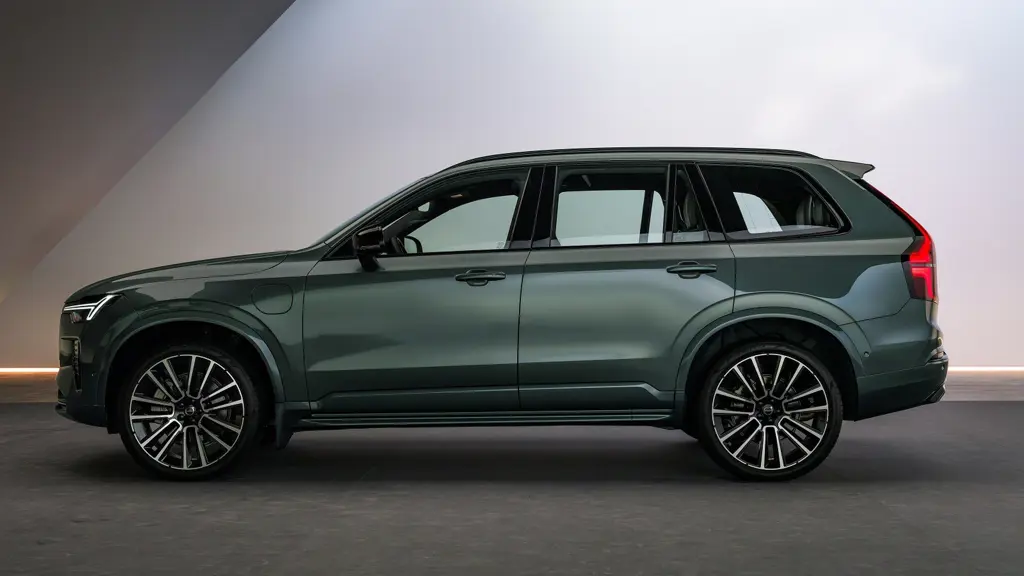
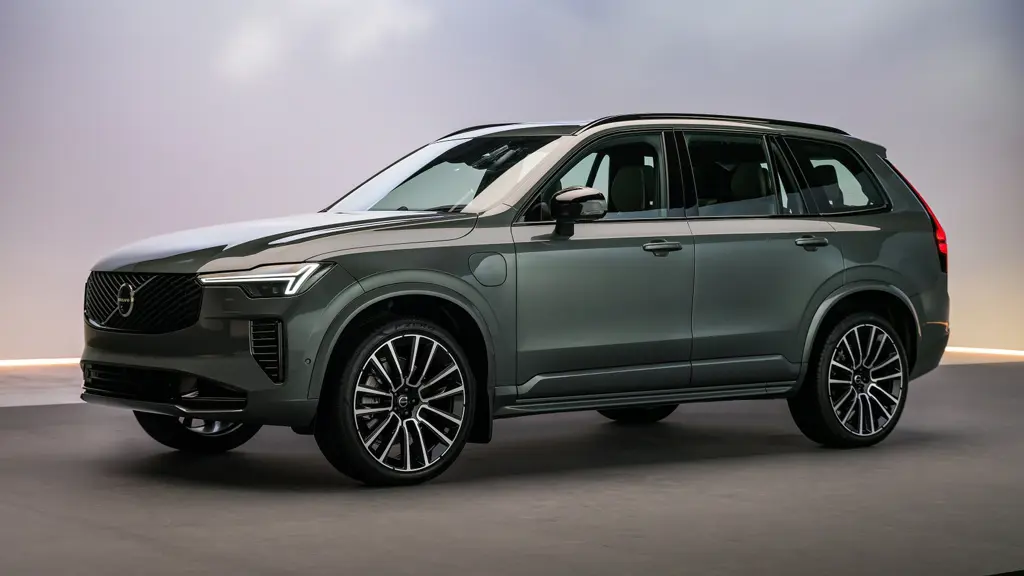
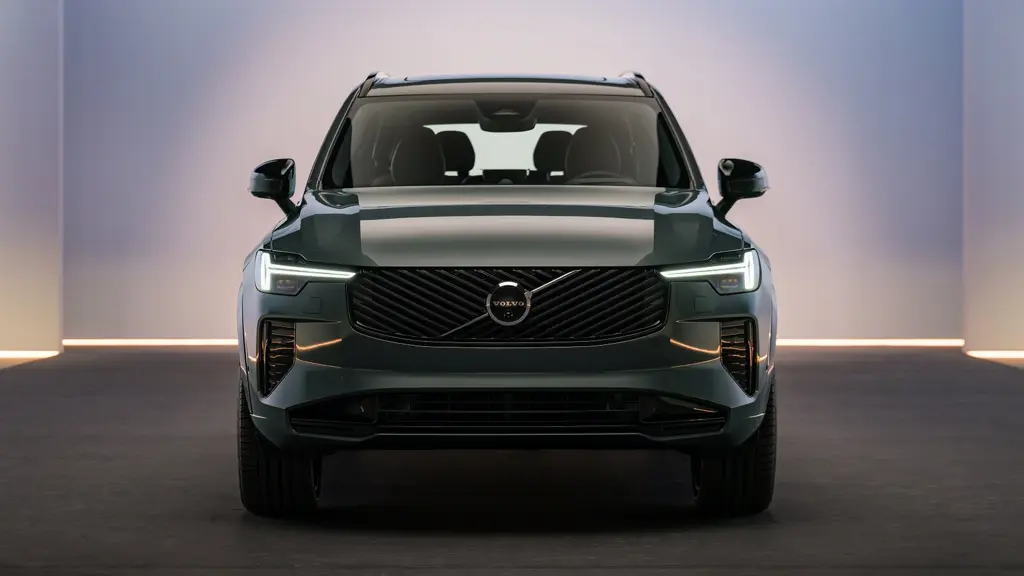
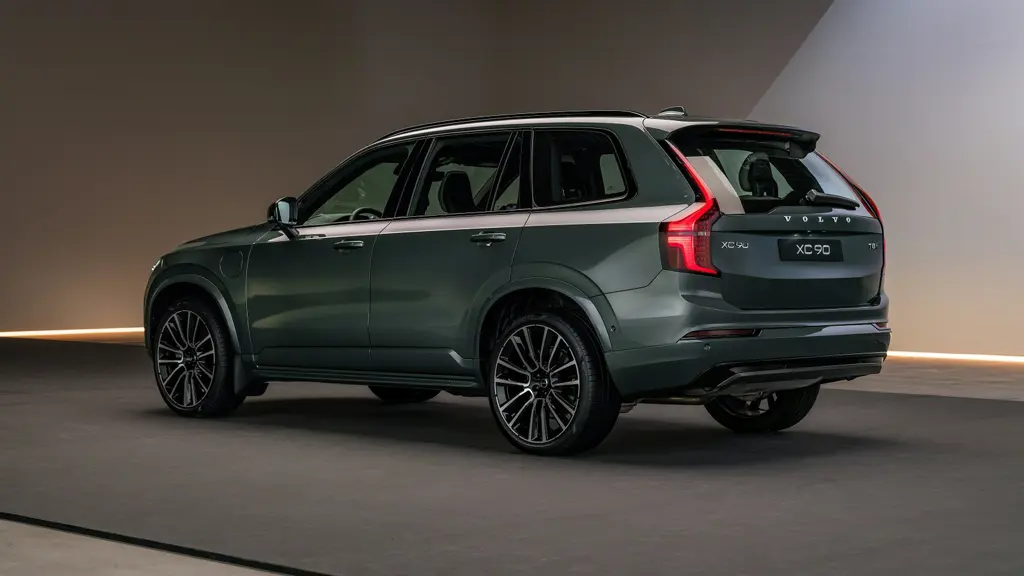
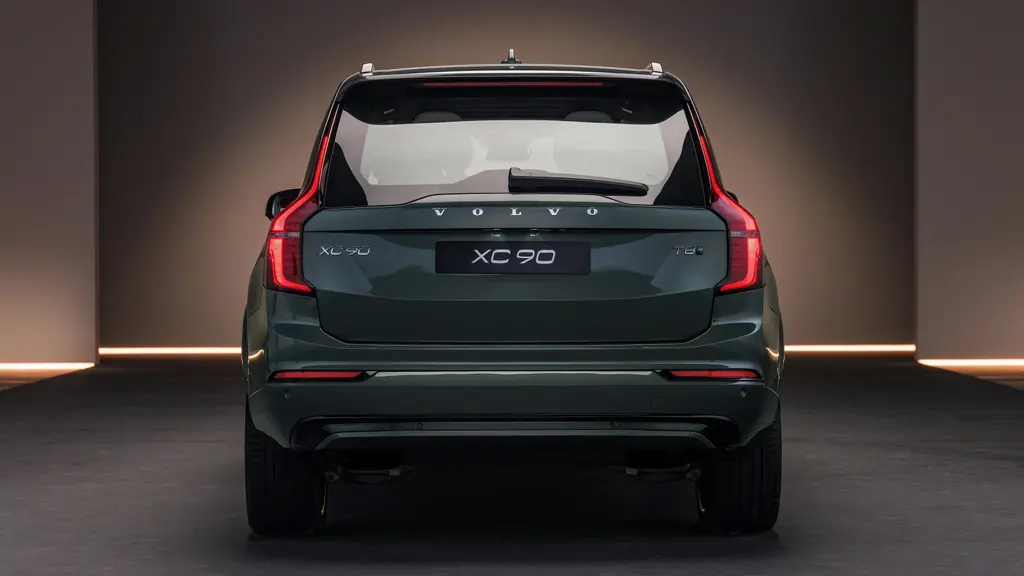
Images shown are for illustration purposes only
-
5.4 secs 0 to 62 mph
-
406 bhp Engine power
Ten Second Review
Volvo's XC90 is at its most appealing in this T8 Plug-in hybrid form. This car got its third update for the 2027 model year, the main further change being to the much longer-ranging PHEV model we're going to look at here. If you need seven seats in a big PHEV-powered family SUV, there still aren't too many better options than this.
Background
Like many of its rivals, Volvo wants to be an EV brand. But many of its customers still want the company's PHEV tech. And that's particularly true when it comes to the marque's largest SUV, the XC90. The second-generation version of the design, first launched back in 2015, has always had a line-up headed by a version with this maker's T8 Plug-in hybrid drivetrain. And Volvo's continually sought to improve it, first with an update in 2019, then with a more far-reaching 2025 model year enhancement and most recently with the model year 2027 update we're going to look at here. This car now heads its segment in terms of EV range yet can still offer the seven-seat versatility that so many owners want.
Driving Experience
Not much was done to the engineering of this second generation XC90 as part of the 2025 update; now we know why. The Swedish engineers were working on a class-leading step forward in this regard - or at least that's what you get from the Plug-in Hybrid powertrain we look at here anyway. It gains a massive increase in battery size - from 18.8kWh to 41.2kWh (37.9kWh usable). This facilitates an equally enormous increase in EV drive range - from 44 miles to a class-leading 99 miles. As before, the huge battery feeds a rear electric motor, which is now more powerful (up from 145 to 175hp) working in tandem with a 243hp 2.0-litre turbocharged four cylinder engine to produce a 406hp total. It's all enough to deliver a set of stats that it's rather hard to get your head around. So, 62mph from rest in just 5.4s - the kind of storming performance you'd get in this segment from, say, a Porsche Cayenne S - matched with real world fuel and CO2 readings that could potentially equal those of a frugal supermini. That's assuming you select the most performance-orientated of the five driving settings that T8 owners are offered - the 'Power' mode that sees both petrol and electric units permanently working together. Alternatively, there are four other drive choices: a 'Hybrid' setting that sees the two engines cutting in and out as necessary: an 'AWD' mode that gives you permanent 4x4 traction off road: plus a 'Pure electric' setting that only uses the battery power. There's even a 'Save' option so that on a longer trip, you can hold that charge until you get to the city driving you might have to do at the end of the journey. As before, there's unruffled poise and exemplary refinement, plus you get supple standards of ride comfort from the multi-link rear suspension and top variants continue to have the desirable 'Active Four-C' adaptive damping and air suspension package. A 'Drive Mode Settings' driving dynamics system allows you to tailor throttle response, steering feel and shift timings from the standard 8-speed auto gearbox to suit the way you want to drive. If you do decide to push on a bit, grip and traction are actually quite impressive aided by the AWD system, while cornering body roll is also decently well controlled.
Design and Build
There are no exterior visual updates for this Model year 2027 XC90, but then none were really needed because this second generation design got quite a far-reaching cosmetic update as recently as 2025. That saw a complete facelift for the entire front end that included the wings, bonnet, bumper and grille. Plus the 'Thors Hammer' LED headlights also got an update, with Matrix tech and a more distinctive two-piece design. There were also redesigned wheels (including an aero-optimised 20-inch set of rims aimed at maximising range) and the rear bumper, the tailgate and tail lights were updated. This further updated XC90 does get a key improvement inside though, with the installation of o new version of the 11.2-inch centre screen, which now runs Volvo's latest interface, which is aided by Google's AI helper Gemini. Otherwise, the changes an earlier owner of this second generation XC90 would notice are those made as part of the earlier 2025 update. These saw a redesign for the centre console to create space for a useful a '2+1' cup holder (with room for an extra slim drinks can), plus the wireless smartphone charger is more conveniently accessible. The ambient lighting system and 360-degree camera system are both enhanced over the systems used on earlier versions of this model, but the 12.3-inch digital driver's display remains as before. Unlike some rival PHEV large SUVs, you can have third row seating in this XC90 T8 model. As before, this genuine seven seater features innovatively designed seats that also free up interior space for passengers in both the second and third seat rows. Even the third row can seat an adult up to 170cm tall. As for the boot space on offer, well that's inevitably going to be a little restricted with all seven seats in place, though even in this configuration, you still get 244-litres of luggage space (down from 247-litres in the B5 version). Fold the 3rd row and you can load up to 650-litres (down from 653-litres in the B5). It's 1,130-litres if you fold the second row as well.
Market and Model
All XC90 Plug-in hybrid T8 variants still come with 7 seats, plus of course there's automatic transmission and AWD. Prices start from around £74,000 (compare to around £66,000 for the 250hp mild hybrid B5 petrol model). There's a choice of three trim levels - 'Core', 'Plus' and 'Ultra', with extra 'Pro' and 'Black Edition' versions of the two plusher specs. Standard kit across the range includes Matrix LED headlamps, a heated windscreen and an anti-theft alarm. Inside all XC90s, the tablet-like 11.2-inch touchscreen in the centre console drives the minor controls and a whole host of Internet-based products and services. And there's a 12.3-inch 'Progressive Drivers Display' for the instruments. Plus heat for the front seats and steering wheel and a rear view camera. Many customers will choose mid-range 'Plus' trim, which includes the brand's 'Active Four-C Chassis' (adaptive damping and air suspension); plus a panoramic glass roof, a 360-degree camera system and a 13-speaker 600-watt Harmon Kardon sound system. Top 'Ultra'-spec gets you larger 21-inch wheels, a Head-up display, front seat massaging, nappa leather perforated upholstery, integrated rear side blinds and an 18-speaker 1,400-watt Bowers & Wilkins sound system. Across the range, XC90 safety gear includes a run off-road protection package which tightens seatbelts and activates energy-absorbing technology in the seats when the car detects challenging terrain ahead. Another system is the auto-braking feature, which cuts in if a driver pulls out in front of oncoming traffic. Both safety systems aim to bring Volvo closer to its vision of nobody being seriously injured or killed in any of its vehicles by the end of this century's third decade.
Cost of Ownership
As you can imagine, the adoption of the long-range PHEV drivetrain has a huge effect on total range. And theoretically, you could now use an XC90 T8 every day without ever visiting a fuel station unless you needed to undertake a longer trip. Obviously that hugely improved EV driving range (up to 99 miles) will also hugely improve the CO2 stat, which in turn will of course lower your BiK tax liability. Surprisingly, Volvo says that the PHEV version's now much bigger 41.2kWh battery doesn't take much longer to charge than the previous model's 18.8kWh pack - around four hours for a full top-up from a home AC wallbox. You could take an hour or so off that with an 11kW three-phase AC supply. Connecting up to a normal domestic three-pin 10amp supply will take about 7 hours. Surprisingly though, unlike with keys rivals, you can't DC rapid-charge this XC90: Volvo's missed a trick there. We should also mention that it's possible to replenish the battery of your PHEV XC90 on the move, via a 'Charge' option you'll find in the 'Battery Usage' section of the centre screen. This forces energy into the battery on the move, but strains the engine to do it, increasing fuel consumption. The same menu gives you the option to 'Hold' the battery's charge for use later in your journey - say for town driving at the end of a long trip. Ultimately, to justify the XC90 PHEV model's price premium, you really have to try and plug it in at every opportunity, otherwise you'll simply find yourself running a heavy petrol-powered SUV and frequently replenishing the 71-litre fuel tank. If on the move, you want to prioritise all-electric progress, you can select a 'Pure' driving mode that prioritises electric-only operation and would be useful in an urban environment. In everyday use though, most XC90 T8 owners will be driving in the 'Hybrid' mode that the car's powertrain automatically defaults to, a setting in which the vehicle will automatically alternate between petrol and electric power. Maintenance should be relatively affordable for a car of this kind, with intervals every year or 18,000 miles. Three or five year pre-paid servicing packages are available to help you budget ahead. If you pay extra for the useful 'On Call with App' remote connectivity system, this Volvo can be programmed to autonomously realise when a service is due, then automatically book it for you at a dealership of your choice. Finally, we'll tell you that the warranty is the usual three year, 60,000 mile package.
Summary
If you're charmed by Volvo's XC90, then you probably ideally want this T8 Plug-in version, usefully improved as part of this third major update. We're impressed that the vastly enhanced EV driving range that comes as part of this enhancement hasn't affected this SUV's ability to offer seven seats - something a number of key rivals still struggle to do. If you didn't want one of these before, you probably still won't now, but if you did, this updated XC90 T8 will also charm you with its Swedish charisma and an emphasis on all the things that the Gothenburg brand does best - cool restrained style, real-world practicality and class-leading safety. Despite its age, it's still a class benchmark.
- 360 degree surround view parking camera with side proximity sensors
- Adjustable steering wheel force
- Drive mode settings
- Driver alert control with lane keeping aid
- Driver assistance (pilot assist and adaptive cruise control)
- Driver Understanding System (Eye Tracking)
- Front and rear park assist
- Intelligent speed assistance
- Oncoming Lane Mitigation
- PAS
- Speed sensitive steering
- DAB Radio (Digital Audio Broadcasting)
- High performance sound, 2x USB Type C in front and 2x USB Type C in rear, 10 speakers/220W output
- Low speed exterior sound speaker
- Steering wheel remote infotainment controls
- Body colour bumpers
- High gloss black front and rear bumper deco
- High gloss black front grille and deco
- Integrated roof rails in high gloss black
- Rear side wing doors
- Roof antenna
- Roof spoiler
- Visible VIN plate
- 12V socket in luggage compartment
- 2nd Row centre armrest with and cupholders
- 3 Spoke tailored sport steering wheel with chrome trim
- Bright metal luggage scuff plate
- Centre console cupholders and storage
- Front and rear door pocket illumination
- Glovebox compartment light
- Heated steering wheel
- Height/reach adjustable steering column
- Illuminated front and rear aluminium tread plates
- Load cover
- Load protection net
- Lockable glovebox compartment
- Luggage compartment divider with grocery bag holder
- Nordico quilted upholstery
- Outboard armrest with cupholder and storage for third row passengers
- Textile headlining
- Underfloor luggage compartment storage
- 7 three point seatbelts
- City safety with steering support includes pedestrian, cyclist detection, front collision warning with full auto brake and rear auto brake
- Driver and passenger airbags
- Drivers knee airbag
- First aid kit
- Front seats SIPS airbags
- IC (Inflatable Curtains) - Full Length
- Passenger airbag cut-off switch
- Power child locks on rear doors
- Road sign information display
- Run off Road Protection
- Seatbelt reminder and pretensioners for all seats
- SIPS (Side Impact Protection System)
- Slippery road and hazard light alert
- Tyre pressure monitoring system
- Warning triangle
- WHIPS whiplash protection system - front
- 2x Key integrated remote control central locking + deadlocking system and auto open/close windows
- Anti-theft alarm including immobiliser/volume sensor + level sensor
- Keyless drive includes keyless entry and keyless start
- Locking wheel nuts
- Battery Capacity % guaranteed under warranty: 70
- Battery Capacity in kWh: 18.8
- Battery Charging Scenario 1 - Charge Time (Mins): 420
- Battery Charging Scenario 1 - Percentage Change: 0-100
- Battery Charging Scenario 1 - Power Supply - kW: 2.4
- Battery Charging Scenario 2 - Charge Time (Mins): 300
- Battery Charging Scenario 2 - Percentage Change: 0-100
- Battery Charging Scenario 2 - Power Supply - kW: 3.8
- Battery Charging Scenario 3 - Charge Time (Mins): 240
- Battery Charging Scenario 3 - Percentage Change: 0-100
- Battery Charging Scenario 3 - Power Supply - kW: 7.2
- Battery Charging Scenario 4 - Charge Time (Mins): 180
- Battery Charging Scenario 4 - Percentage Change: 0-100
- Battery Charging Scenario 4 - Power Supply - kW: 11.5
- Battery Leased: False
- Battery Type: Lithium-ion
- Charging Port Location: Left Side Front
- Coupler/Connector Type: Type 2
- Maximum Charging Rate - kW: 11.5
- Standard manufacturers Battery warranty - Mileage: 100000
- Standard manufacturers Battery warranty - Years: 8
- Usable Battery Capacity: 14.7
- WLTP - EC AC Weighted (kWh/100km) - Comb - TEH: 21.4
- WLTP - EC AC Weighted (kWh/100km) - Comb - TEL: 20.3
- WLTP - EC AC Weighted (miles/kWh) - Comb - TEH: 2.9
- WLTP - EC AC Weighted (miles/kWh) - Comb - TEL: 3.1
- WLTP - Equivalent AER (km) - Comb: 69
- WLTP - Equivalent AER (km) - Comb - TEH: 63
- WLTP - Equivalent AER (km) - Comb - TEL: 69
- WLTP - Equivalent AER (miles) - Comb: 42.9
- WLTP - Equivalent AER (miles) - Comb - TEH: 39.1
- WLTP - Equivalent AER (miles) - Comb - TEL: 42.9
- HC+NOx: N
- Particles: N
- Standard Emissions: EURO 6
- WLTP - CO2 Weighted (g/km) - Comb: 27
- WLTP - CO2 Weighted (g/km) - Comb - TEH: 36
- WLTP - CO2 Weighted (g/km) - Comb - TEL: 27
- Camshaft: DOHC
- Catalytic Convertor: True
- CC: 1969
- Cylinder Layout: IN-LINE
- Cylinders: 4
- Engine Layout: FRONT TRANSVERSE
- Fuel Delivery: TURBO DIRECT INJECTION
- Gears: 8 SPEED
- Number of Valves: 16
- Transmission: SEMI-AUTO
- EC Directive 1999/100/EC Applies: False
- WLTP - FC Weighted (l/100km) - Comb - TEH: 1.6
- WLTP - FC Weighted (l/100km) - Comb - TEL: 1.2
- WLTP - FC Weighted (mpg) - Comb - TEH: 176.3
- WLTP - FC Weighted (mpg) - Comb - TEL: 235.1
- Alternative Fuel Qualifying: True
- Badge Engine CC: 2.0
- Badge Power: 406
- Based On ID: N
- Coin Description: T8 PHEV AWD
- Coin Series: Plus Dark
- Generation Mark: 2
- Insurance Group 1 - 50 Effective January 07: 42E
- Man Corrosion Perforation Guarantee - Years: 8
- Manufacturers Paintwork Guarantee - Years: 3
- Safety Concerns: False
- Service Interval Frequency - Months: 12
- Service Interval Mileage: 18000
- Special Edition: False
- Special Order: False
- Standard manufacturers warranty - Mileage: 60000
- Standard manufacturers warranty - Years: 3
- Vehicle Homologation Class: M1
- 0 to 62 mph (secs): 5.4
- Engine Power - BHP: 406
- Engine Power - KW: 299
- Engine Power - PS: True
- Engine Power - RPM: 5400
- Engine Torque - LBS.FT: 266
- Engine Torque - MKG: 36.7
- Engine Torque - NM: 360
- Engine Torque - RPM: 2000
- Top Speed: 112
- Emissions Test Cycle: WLTP
- RDE Certification Level: RDE 2
- Alloys: True
- Space Saver: False
- Tyre Size Front: 275/45 R20
- Tyre Size Rear: 275/45 R20
- Tyre Size Spare: TYRE REPAIR KIT
- Wheel Style: 5 MULTI SPOKE
- Wheel Type: 20" ALLOY
- Height: 1776
- Height (including roof rails): N
- Length: 4953
- Wheelbase: 2984
- Width: 2008
- Width (including mirrors): 2140
- Fuel Tank Capacity (Litres): 71
- Gross Vehicle Weight: 2950
- Luggage Capacity (Seats Down): 1941
- Luggage Capacity (Seats Up): 244
- Max. Loading Weight: 670
- Max. Roof Load: 100
- Max. Towing Weight - Braked: 2400
- Max. Towing Weight - Unbraked: 750
- Minimum Kerbweight: 2280
- No. of Seats: 7
- Turning Circle - Kerb to Kerb: 11.9