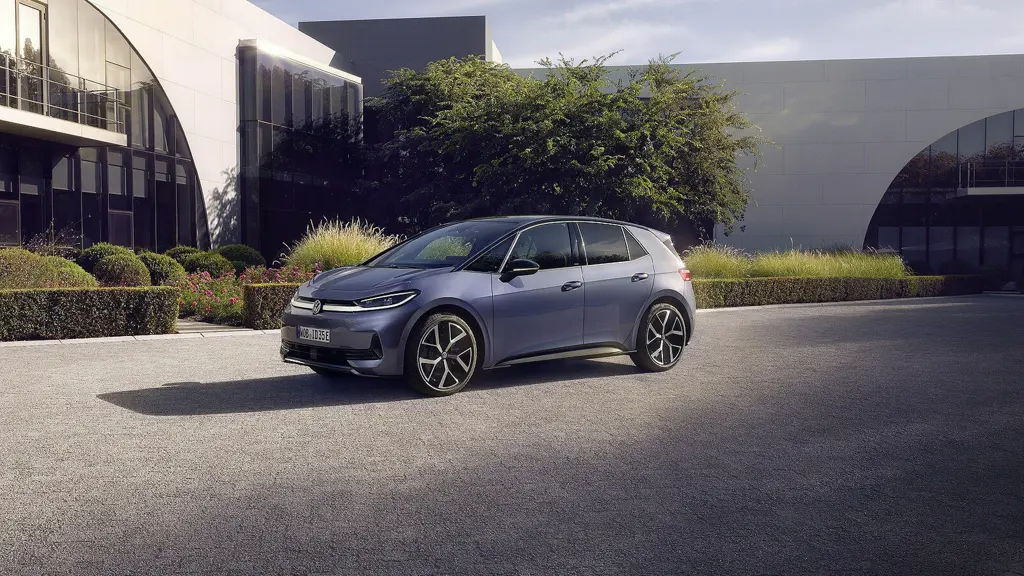
Volkswagen ID.3 NEO 125kW Life 50kWh 5dr Auto
- Automatic
- Electric
- 5 door hatchback


/?format=webp)
/?format=webp)
/?format=webp)
/?format=webp)
Images shown are for illustration purposes only
-
8.6 secs 0 to 62 mph
-
170 bhp Engine power
-
258 mi Combined range
-
52 kWh Battery capacity
-
8 yrs Battery warranty
8 years or 100,000 miles
Ten Second Review
Volkswagen's ID 3 Neo is an almost completely reinvented version of the original ID.3 compact hatch, which was the company's very first really mainstream electric car. Lots has been learnt from the issues that early design faced in its first half a decade of production and the result is a small but spacious electric car that brand loyalists ought to feel a lot more comfortable with.
Background
The original Volkswagen ID.3 launched back in 2020 was not, we now learn, 'a true Volkswagen' - according at least to the latest leaders of the brand. Here though, is a version of this car that apparently is; the ID.3 Neo. This isn't the first go the Wolfsburg maker has had at bringing us the kind of ID.3 we should have had from the start. The original car was so beset with quality and software issues that a wide-ranging update had to be introduced less than three years into production. But all that really did was correct the earlier glitches. Not the fact that the original car was designed more around technology than the needs of the people who would actually drive and own it. But things are changing in Wolfsburg, where new programme has been implemented 'to build true Volkswagens again'. This further improved ID.3 was the first car to benefit from that, the added 'Neo' moniker (a reference to the original model's development codename) there to emphasise just how much of a significant update this is.
Engines and Tech Spec
The drivetrain changes here are more far-reaching than you might expect. The Neo gets a completely new set of batteries that energise a more efficient completely new APP350 electric motor (replacing the previous APP310 unit): the letters stand for 'Axial Parallel Positive' and the numbers designate the torque output. As a potential owner or user, the number you'll be most interested in of course will be the drive range figure. The smallest 50kWh battery goes 258 miles between charges (17 miles further than its pre-facelift equivalent), while the 58kWh pack most will choose manages up to 306 miles (36 miles more than before). The biggest 79kWh pack takes the car up to 390 miles (19 miles further than before). We mentioned the new APP350 electric motor that all Neos use; it has a slug more pulling power than the old unit - up from 310 to 350Nm. And its outputs are, as you'd expect, linked to battery size. It's 170PS for the 50kWh model, with 0-62mph in 8.6s. The 58kWh version delivers 190PS and manages 62mph in 8.0s. Finally, the 79kWh variant puts out to 231PS and makes 62mph in 7.1s. If you want to go faster than that in an ID.3 Neo, you'll need to ask your dealer about the top GTI version Volkswagen has planned, which gets a potent APP550 motor with 550Nm of torque. Despite all these detailed drivetrain differences, the fundamentals here haven't changed. Which means that as before, unlike many of its non-VW Group segment rivals (but like the original Beetle), this ID.3 remains rear-driven. Enabling a taxi-type urban turning circle you'll really appreciate in town driving. Which is where you might most readily pick up another change made as part of the Neo update - the 'One-Pedal Drive' set-up now possible as part of the updates made to the brake regen system. There's also a new version of the brand's 'Travel Assist' semi-autonomous driving system, which can spot red traffic lights ahead and slow accordingly. As before, ride quality and refinement are very class-competitive.
Design and Build
Apparently, Wolfsburg had all kinds of people telling them to rename this car the 'ID.Golf'. Rightly, they resisted that. There's very little Golf visual DNA here and you could argue, prior to this update, relatively little Volkswagen DNA either. But with this ID.3 Neo, that's starting to change. Sure, there's nothing fundamentally different here - the dimensions and the ultra-modern look of the Golf-sized one-box hatchback shape - all of it's essentially as before. But someone familiar with ID design would certainly recognise this Neo model as wearing a fresh suit of clothes; courtesy of the adoption of the 'Pure Positive' design language that shaped the brand's new-era ID.Polo and ID.Cross EVs. Epitomised by the new grille treatment added to the nose, with its illuminated central badge and restyled bumpers. Wheel sizes are between 18 and 20-inches and the flatter, wider more mature look the stylists were after has been achieved through replacing the previous black panels of the roof, the A-pillars and the tailgate with body-coloured ones. The key Neo changes though, lie inside. Gone is the old car's tiny instrument screen and very un-Volkswagen feel of shiny budget brand quality. Gone too are all the quirky user interface features that put people off the original model's cabin - like the steering wheel haptic buttons or the lack of dedicated rear window switches. Also gone are the ill-advised touch slider climate controls, replaced by a row of tactile physical buttons with knurled edges. If you always wished that the ID.3 could have a similar level of interior quality to that which characterises a Golf, you'll now find it here. Nothing feels cheap anymore and the new curved dashboard with its redesigned centre console is surrounded by softer, higher quality materials. There are a few neat touches too, like the way the new bigger 10.25-inch digital driver's display you view through the redesigned steering wheel can be customised to resemble the instrument cluster of the 1980s Golf, complete with charge gauge. The 13-inch landscape-format central touchscreen is also completely new and has a user-friendly UX interface with a proper physical volume knob. The centre console has a storage bin deep enough for a 13-inch tablet; and the wireless charging pad can accommodate a couple of big 'phones. Everything further back is as before, which is fine because it didn't need changing. Back seat space remains extremely impressive - far better for legs and shoulders than in a combustion Golf. Out back, there's 385-litres of boot space, extendable to 1,267-litres.
Market and Model
Prices aren't much different from before, sitting mainly in the £32,000-£38,000 bracket, after deduction of the available £1,500 government Electric Car Grant, which applies to all variants. There are two main trim levels - 'Life' and 'Style', with a further 'Style Launch Edition' also initially available. The 'Life' trim focuses on function and comfort. Standard features include adaptive cruise control, parking sensors, a rear-view camera, a 12.9-inch infotainment system with satellite navigation and IDA voice assistant, a 10.25-inch Digital Cockpit instrument display and wireless charging with AppConnect. Plusher 'Style'-spec gets 'sporty' design elements and more technology as standard, including Keyless entry and start/stop, heated front seats and steering wheel, IQ.LIGHT LED matrix headlights, privacy glass and Sports comfort front seats with ArtVelours upholstery. The 'Style Launch Edition' level adds features such as a head-up display, panoramic glass roof, electric front seats with massage function and Volkswagen's 'Park Assist Pro' system (the latter for remote and memory parking). The 'Launch Edition' version also gets the brand's new 'Connected Travel Assist 3.0' set-up with automatic traffic light recognition. Travel Assist facilitates Level 2 automated driving at speeds up to 130mph and the system is capable of taking over the steering, braking and acceleration of your ID.3 at speeds starting from 0mph right up to the car's maximum speed. In addition, as with all new ID. models, with any ID.3 Neo it's possible to supply power to external devices - from electric barbeques to e-bikes - with an output of up to 3.6kW directly from the high-voltage battery using the vehicle-to-load function, available via an optional adaptor. And owners will be able to control their ID.3 Neo using a new Digital Key feature on their smartphones. Wheel sizes are from 18 to 20-inches, with a new super-sized rim now available resembling a Japanese throwing star and named after the ID.3's factory hometown of Zwickau.
Cost of Ownership
You might hope the fundamental switch to LFP chemistry for the two new mainstream batteries (50kWh and 58kWH) would result in faster DC charging speed. Actually, the reverse is true, these two packs now only able to DC charge at up to just 100kW and 105kW respectively. The biggest 79kWh battery retains its old NMC chemistry and has a slightly faster DC charging speed than before - 183kW. As usual with an EV, around 80% of charging will be done via programmable overnight replenishment using owners' garage wallboxes - bespoke versions of these are available through Volkswagen. With the 58kWh version, a 7.4kW wallbox will charge the car in 9 hours 15 mins (12 hours 15 mins for the 79kWh version). Out and about, with a 100kW rapid charger, around 180 miles-worth of electricity can be taken on board in just 30 minutes. The 50kWh model takes on 10-80% of charge in 24 minutes, it's 26 minutes for the 58kWh version and 29 minutes for the 79kWh model. As always with any EV, you'll also make savings in BiK payments (rated at 4% from April 2026). There's a fixed servicing schedule, with a basic inspection after two years (unlimited mileage) and subsequent services every year or 20,000 miles. There's the usual unremarkable three year / 60,000 mile Volkswagen warranty (the third year operated by the retailer). And as usual with an EV, the battery pack is warrantied to have at least 70% of its usable capacity after eight years or 100,000 miles.
Summary
We're not entirely sure what 'a true Volkswagen' actually is, but the brand itself now seems to feel quite sure and says that this ID.3 Neo epitomises that elusive quality. Quality is indeed the watchword of this rejuvenated compact EV hatch. It'll certainly be a lot easier for Golf folk to adapt to. Mind you, it might still not quite be time to burn those Golf badges just yet, given that we're in an era when a Golf eHybrid PHEV goes 88 miles between charges and costs much the same as a bigger-battery ID.3. But if for you, a full-EV it has to be, then this ID.3 Neo looks a far more class-competitive proposition than it previously did, in almost every area apart from the disappointing DC charging speeds that apply to the new mainstream LFP batteries. Positives carried over from before include the clever packaging, the quick performance, the sharp manoeuvrability, excellent refinement and a superbly spacious back seat. A fresh start then, for the ID.3. And in many ways a fresh start for its maker as a new era of electric ID models hit the streets. Perhaps this time, they really will be 'true Volkswagens'.
- Adaptive cruise control
- Advanced driver attention and drowsiness monitor
- Driver monitoring camera
- Driving profile selection
- Dynamic road sign display
- Front and rear parking sensors
- Lane assist
- Oncoming vehicle braking when turning including swerve support
- Power assisted speed sensitive steering
- Predictive speed limiter
- Rear view camera
- 2 USB C ports in front, 2 USB charging sockets on the centre console in the rear charging capacity upto 45W
- Digital radio reception (DAB)
- Front speakers
- Body colour door handles
- Body coloured bumpers
- Rear side wing doors
- Centre console with illuminated storage compartment with sliding cover and two drinks holders
- Front armrests
- Reach + rake adjustable steering column
- Standard pedal cluster
- Styling pack - ID.3 Neo
- 3 rear 3 point seatbelts
- Centre airbag
- Child locks on rear doors
- Driver and front passenger airbags
- First aid kit with warning triangle and safety vest
- Front and rear curtain airbags
- Front passenger airbag deactivation
- Front side airbags
- Proactive passenger protection system
- Two tone horn
- Tyre pressure loss indicator
- Warning signal and warning light for front and rear seatbelts not fastened
- Anti theft wheel bolts
- Anti-theft alarm system with interior monitoring, backup horn, and towing protection
- Central locking system
- Immobiliser
- Remote central locking
- Battery Capacity % guaranteed under warranty: 70
- Battery Capacity in kWh: 52
- Battery Charging Scenario 1 - Charge Time (Mins): 330
- Battery Charging Scenario 1 - Percentage Change: 0-100
- Battery Charging Scenario 1 - Power Supply - kW: 11
- Battery Charging Scenario 2 - Charge Time (Mins): 24
- Battery Charging Scenario 2 - Percentage Change: 10-80
- Battery Charging Scenario 2 - Power Supply - kW: 100
- Battery Charging Scenario 3 - Charge Time (Mins): N
- Battery Charging Scenario 3 - Percentage Change: N
- Battery Charging Scenario 3 - Power Supply - kW: N
- Battery Charging Scenario 4 - Charge Time (Mins): N
- Battery Charging Scenario 4 - Percentage Change: N
- Battery Charging Scenario 4 - Power Supply - kW: N
- Battery Leased: False
- Battery Type: Lithium-ion
- Charging Port Location: Right Side Rear
- Coupler/Connector Type: CCS Type 2
- Maximum Charging Rate - kW: 100
- Standard manufacturers Battery warranty - Mileage: 100000
- Standard manufacturers Battery warranty - Years: 8
- Usable Battery Capacity: 50
- WLTP - EC (kWh/100km) - Comb: 14
- WLTP - EC (miles/kWh) - Comb: 5
- WLTP - Pure Electric Range (km) - City: 550
- WLTP - Pure Electric Range (km) - Comb: 415
- WLTP - Pure Electric Range (km) - Comb - TEH: 415
- WLTP - Pure Electric Range (km) - Comb - TEL: 415
- WLTP - Pure Electric Range (miles) - City: 342
- WLTP - Pure Electric Range (miles) - Comb: 258
- WLTP - Pure Electric Range (miles) - Comb - TEH: 258
- WLTP - Pure Electric Range (miles) - Comb - TEL: 258
- CO: N
- CO2 (g/km): 0
- HC: N
- HC+NOx: N
- NOx: N
- Particles: N
- Standard Emissions: N
- Camshaft: N
- Catalytic Convertor: N
- CC: 1
- Compression Ratio: N
- Cylinder Layout: N
- Cylinders: N
- Cylinders - Bore (mm): N
- Cylinders - Stroke (mm): N
- Engine Code: E133HB
- Engine Layout: N
- Fuel Delivery: N
- Gears: 1 SPEED
- Number of Valves: N
- Transmission: AUTO
- EC Combined (mpg): N
- EC Directive 1999/100/EC Applies: N
- EC Extra Urban (mpg): N
- EC Urban (mpg): N
- AdBlue: N
- Alternative Fuel Qualifying: True
- Badge Engine CC: 0.0
- Badge Power: 170
- Based On ID: N
- Coin Description: N
- Coin Series: Life
- Generation Mark: 1
- Insurance Group 1 - 50 Effective January 07: 20E
- Man Corrosion Perforation Guarantee - Years: 12
- Manufacturers Paintwork Guarantee - Years: 3
- Service Interval Frequency - Months: 24
- Service Interval Mileage: 999999
- Special Edition: False
- Special Order: False
- Standard manufacturers warranty - Mileage: 60000
- Standard manufacturers warranty - Years: 3
- Timing Belt Interval Frequency - Months: N
- Timing Belt Interval Mileage: N
- Vehicle Homologation Class: M1
- 0 to 62 mph (secs): 8.6
- Engine Power - BHP: 170
- Engine Power - KW: 125
- Engine Power - PS: True
- Engine Torque - LBS.FT: 258
- Engine Torque - MKG: 35.7
- Engine Torque - NM: 350
- Top Speed: 99
- Emissions Test Cycle: WLTP
- Alloys: True
- Space Saver: False
- Tyre Size Front: 215/55 R18
- Tyre Size Rear: 215/55 R18
- Tyre Size Spare: TYRE REPAIR KIT
- Wheel Style: EDINBURGH
- Wheel Type: 18" ALLOY
- Height: 1561
- Length: 4265
- Wheelbase: 2769
- Width: 1809
- Width (including mirrors): 2070
- Fuel Tank Capacity (Litres): N
- Gross Vehicle Weight: 2310
- Luggage Capacity (Seats Down): 1336
- Luggage Capacity (Seats Up): 383
- Max. Loading Weight: 500
- Minimum Kerbweight: 1810
- No. of Seats: 5
- Turning Circle - Kerb to Kerb: 11.5